
The Essential Guide to UN Rated Plastic Drums for Hazmat Shipping
Cold rain slicked the concrete of our shipping yard as we watched a containment crew in bright yellow suits deal with a slow, corrosive hiss from a failing barrel. That single morning taught us everything. In high-stakes logistics, a single split seam can drain thousands of dollars in EPA penalties, freeze operations for a week, and put lives on the line. The culprit was a cheap, uncertified container. Someone substituted it at the last minute to save twenty bucks. That single mistake forced our logistics team to overhaul how we select and check un rated plastic drums across our entire supply chain. Managing hazardous material drums is not a mere paperwork exercise. It is a shield protecting our people and our business. This is the story of how we learned to navigate the world of hazmat shipping containers without taking shortcuts.
Decoding the Secret Language of UN Markings
For years, we ignored the long strings of letters and numbers stamped into the blue plastic of our barrels. We assumed they were just internal serial numbers. That illusion shattered in Rotterdam. A customs inspector blocked a massive ocean shipment because the density of our liquid chemical exceeded the tiny number stamped on the barrel wall. It was an expensive, embarrassing lesson. To fix this, we trained everyone on how to read these codes. They are the passport for every single one of our un rated plastic drums.
Look closely at a code like UN 1H1/Y1.9/150/24/USA/M4123. It tells a story. The letters UN show that the package meets international safety rules. Then comes the design identifier, like 1H1 or 1H2. The number 1 means a drum. The H stands for high-density polyethylene. The final digit tells you the configuration. A 1 denotes a tight-head drum with its top permanently sealed. A 2 means an open-head drum with a removable lid. Getting this wrong invites disaster on a rolling ocean voyage.
Next are the letters X, Y, or Z. These represent hazard tiers. X is for Packing Group I, representing severe hazards. Y covers Packing Group II, for moderate hazards. Z is for Packing Group III, which handles low-risk materials. An X-marked drum can carry anything, making it highly adaptable. A Y-rated drum handles moderate and low hazards but fails the safety threshold for severe chemicals. A Z-rated container is restricted strictly to low-hazard loads. This structure prevents volatile chemicals from melting through light-duty barriers.
Right after that letter, you will find the maximum specific gravity for liquids or gross mass for solids. During our Rotterdam cargo disaster, we poured a heavy liquid with a specific gravity of 1.5 into a drum rated only for 1.2. The container simply could not handle that weight during transport. The physical strain was too much. After this limit, you will see the hydrostatic test pressure in kilopascals, like 150 or 250. For solid packages, a simple S appears instead. The final characters reveal the production year, the country, and the factory code, creating a clear history for every drum.
The Brutal Testing Grounds of Hazmat Containers
Earning those stamped letters requires surviving a chamber of horrors. We watched these trials at a certified testing lab, and the sheer violence of the process changed how we view industrial plastics. First, technicians freeze the drums to minus eighteen degrees Celsius. This deep freeze makes the plastic brittle, mimicking a winter deck on a North Atlantic freighter. They fill the frozen drums with cold water and antifreeze, then hoist them up to 1.8 meters high. Then, they drop them. The drums slam onto solid concrete, striking on their corners, seams, and valves. A single drop of leakage means instant failure.
Next comes the pressure test. Technicians submerge the drum in water and pump in air, looking for a single bubble rising from the seams. After that, they pump in water to reach high pressures, sometimes over two hundred and fifty kilopascals, holding it for five long minutes. This ensures the walls can handle the pressure swings of a cargo plane climbing to thirty thousand feet. Finally, they stack heavy weights on the drum for twenty-eight days in a forty-degree chamber. Only survivors get the stamp.
Designing for Chemical Compatibility and Molecular Safety
We used to think all blue plastic drums were the same. We were wrong. The relationship between a liquid payload and a plastic wall is a silent battle of chemistry. High-density polyethylene, or HDPE, is tough and light, which is why it is so common. Some aggressive chemicals can still destroy standard HDPE over time. They attack the polymer chains directly, causing the plastic to soften, swell, or turn brittle. Other times, stress cracking occurs, where minor vibrations under pressure cause microscopic fractures to split wide open.
To stop this, we use fluorinated drums for our most aggressive chemicals. In this process, the inner walls of the plastic are exposed to fluorine gas, creating a thin, ultra-tough fluorocarbon shield. This shield stops permeation, which is when chemical molecules slowly seep through the plastic itself. Permeation can fill a sealed container with invisible, explosive fumes, waiting to injure the worker who opens the doors. We now insist on fluorinated un rated plastic drums for all volatile organic compounds and concentrated solvents.
Choosing the Right UN Rated Plastic Drums: Open Head vs. Tight Head
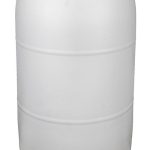
Choosing between an open lid and a closed top is not a matter of convenience. It is a structural decision. A tight-head drum, marked with the 1H1 code, has its top permanently fused to the body. You access the inside through two small openings, usually a two-inch bung and a smaller three-quarter-inch vent. This design offers immense strength because there are no seams or rings to fail under pressure. Tight-head drums are the standard for thin liquids where spills must be prevented at all costs.
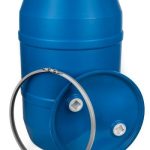
An open-head drum, coded 1H2, has a lid secured by a heavy steel ring. This is necessary for thick pastes, powders, and heavy gels that cannot pour through a small hole. The wide opening makes filling and cleaning simple. This convenience comes with a trade-off in pressure strength. Open-head drums are rated for lower pressures. Our rule is simple. If a chemical flows easily, it goes into a tight-head drum. We only use open-head drums when the material is too thick to pour.
The Critical Role of Closure Instructions and Torque Specifications
Buying a certified drum is only half the battle. If you do not close it exactly like the manufacturer did during testing, the certification is void. This is a common trap, and it is a major focus for highway safety inspectors. Every drum maker provides detailed instructions with exact torque settings for every lid, plug, and gasket. In our warehouse, we once found workers tightening bungs with basic hand wrenches, guessing the tightness. This meant we were sending non-compliant drums onto public roads. Some were too loose, risking leaks. Others were too tight, stripping the plastic threads.
We fixed this by buying calibrated torque wrenches and tracking every seal. A standard two-inch plug requires the specific torque outlined in the manufacturer’s closure instructions. The gasket material must also match the chemical. A harsh acid can eat through an EPDM gasket in hours, even if the torque is perfect. We also train our team to tap the steel rings of open-head drums with a mallet as they tighten them, ensuring a tight seal. These details keep our shipments safe and free from heavy fines.
The Lifecycle and Environmental Reconditioning of Poly Drums
The life of a tough plastic drum should not end after its first trip. Mountainous piles of empty chemical barrels are a massive waste and a liability. We turned to professional reconditioning to solve this. You cannot just wash a chemical drum with a hose. Certified reconditioners use high-pressure hot water, caustic washes, and neutralizers to clean every trace of chemical from the plastic.
After washing, each drum is tested for leaks with air pressure, just like a new drum. Technicians inspect them for thin spots and stress cracks. Passing drums get a new lease on life, though their UN rating might be lowered. Some are marked with an R for reconditioned. Drums that are too damaged are shredded and melted down to make non-safety products like drainage pipes. Using these drums for our low-risk materials significantly cut our packaging costs and kept tons of plastic out of landfills.
Navigating Global Logistics and International Compliance Standards
Shipping across borders taught us that local road rules do not apply on the high seas. For ocean shipping, the IMDG Code governs every container. Our un rated plastic drums must survive temperature shifts and the constant swaying of a cargo ship in heavy seas.
Air transport is even tougher. The ICAO and IATA rules require drums to handle extreme pressure changes as cargo planes climb. A drum rated for ninety kilopascals works fine on a truck, but air cargo often requires a rating of two hundred and fifty kilopascals. Our team now checks the destination, shipping method, and chemical class before filling a single drum, preventing intercepted shipments and high-altitude spills.
Summary of Key Takeaways for Hazmat Packaging Success
Keeping your shipping lines safe and compliant requires steady attention to detail. Always match the UN code on your drums to the specific gravity and risk level of your cargo. Treat closure instructions as law, and always use calibrated torque wrenches. Check your chemical compatibility, and use fluorinated barriers for aggressive liquids. Use tight-head drums for thin liquids and open-head drums for solids. Finally, work with certified reconditioners to extend the life of your barrels. Treating these containers as engineered safety systems protects your team, your product, and your bottom line.

 English
 Français du Canada
 Deutsch
 Português do Brasil
 Español de México
 Slovenščina
 Suomi
Suomi